Release time : 2026-11-02 Source :Organizing Committee
BEIJING, 30 October — China’s National Energy Administration (NEA) said at a regular press conference on 30 October that investment in the country’s hydrogen sector doubled year-on-year in the first three quarters, with green-hydrogen production, storage, transport and demonstration projects advancing at an accelerated pace.
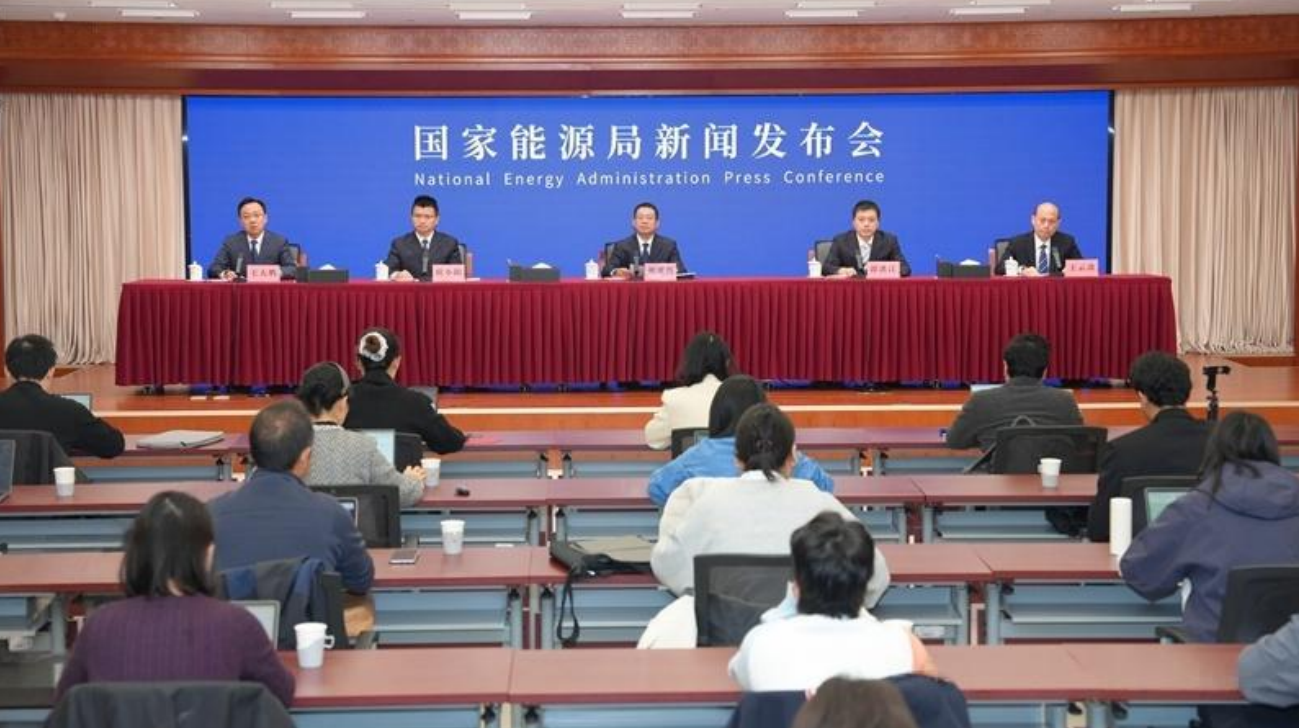
Xing Yiteng, Deputy Director-General of the NEA’s Department of Development and Planning, said investment in key national energy projects remained stable across the first three quarters. Capital spending shifted notably toward new, high-quality and low-carbon segments, with investment in new-generation power grids accelerating and acting as a major driver of the energy transition.
Combined investment in power grids, new-energy storage and charging-swap infrastructure rose 15.3% year-on-year. By the end of September, fixed-asset investment by grid enterprises had exceeded RMB 600 billion, equivalent to two-thirds of the full-year expected investment. Construction of ultra-high-voltage (UHV) backbone corridors, urban-rural distribution-network upgrades and smart-grid retrofits advanced rapidly, consolidating the foundation for energy transmission and consumption.
The hydrogen sector maintained strong momentum. Completed hydrogen-industry investment in the first three quarters doubled compared with the same period a year earlier. Green-hydrogen production, storage and transport, and demonstration-application projects are being rolled out at an accelerated pace, driving growth in emerging energy business segments.
As a core component of the “Six Networks” initiative, the new-generation power grid represents far more than simple capacity expansion for conventional grid infrastructure. It delivers a systemic transformation covering architecture, technology and service models. China continues to expand its west-to-east power-transmission corridors. The Northern Shaanxi–Anhui ±800 kV UHVDC project has entered commercial operation, while major projects such as the Tibet–Greater Bay Area UHV transmission project are under active construction. Twenty-five UHV DC transmission lines are now operational nationwide, with total transmission capacity surpassing 340 GW. Main UHV AC grid frameworks for North, Central and East China have taken shape, and regional extra-high-voltage networks continue to improve, boosting cross-regional power-dispatching capabilities. China’s national stock of charging facilities has surpassed 24 million units, forming the world’s largest charging network to support new-energy-vehicle deployment. Progress has also been made in source–grid–load–storage coordination.
Market participation from private-sector players continues to expand. Private enterprises invested more than RMB 145 billion in energy projects in the first three quarters, taking part widely in distributed photovoltaic, onshore wind and charging-swap infrastructure. A diversified investment landscape has solidified, injecting vitality into energy-project delivery.
While safeguarding secure energy supply, energy-investment priorities continue to tilt toward green and low-carbon development. Investments in UHV lines, distribution networks and storage help resolve bottlenecks for large-scale new-energy grid integration. Meanwhile, forward-looking sectors including hydrogen and smart grids are fostering new growth drivers for the energy economy.
Current energy investment balances supply security and low-carbon transition. Rising capital inflows into new-generation grids, energy storage and hydrogen not only expand effective investment but also deliver hardware support for large-scale new-energy development and systemic energy decarbonisation. Going forward, further investment returns will materialise as flagship energy projects progress, supporting the build-out of the new-type power system and high-quality energy development.
Exhibitor/Conference Consultation
Contact: Ms. Becky CHEN
Tel: +86 15910580218
Email: becky@cntigerexpo.com
Exhibitor Consultation
Contact: Mr. Lito HU
Tel: +86 13601321637
Email: lito.hu@cntigerexpo.com
Exhibitor Consultation & Media Cooperation
Contact: Ms. Yasmin ZHENG
Tel: +86 13621183385
Email: zhengyaxin@cntigerexpo.com


