Release time : 2026-08-27 Source :Organizing Committee
China’s State Administration for Market Regulation (SAMR) has announced plans to step up international standard development for the hydrogen industry as part of a broader initiative to strengthen quality across industrial supply chains.
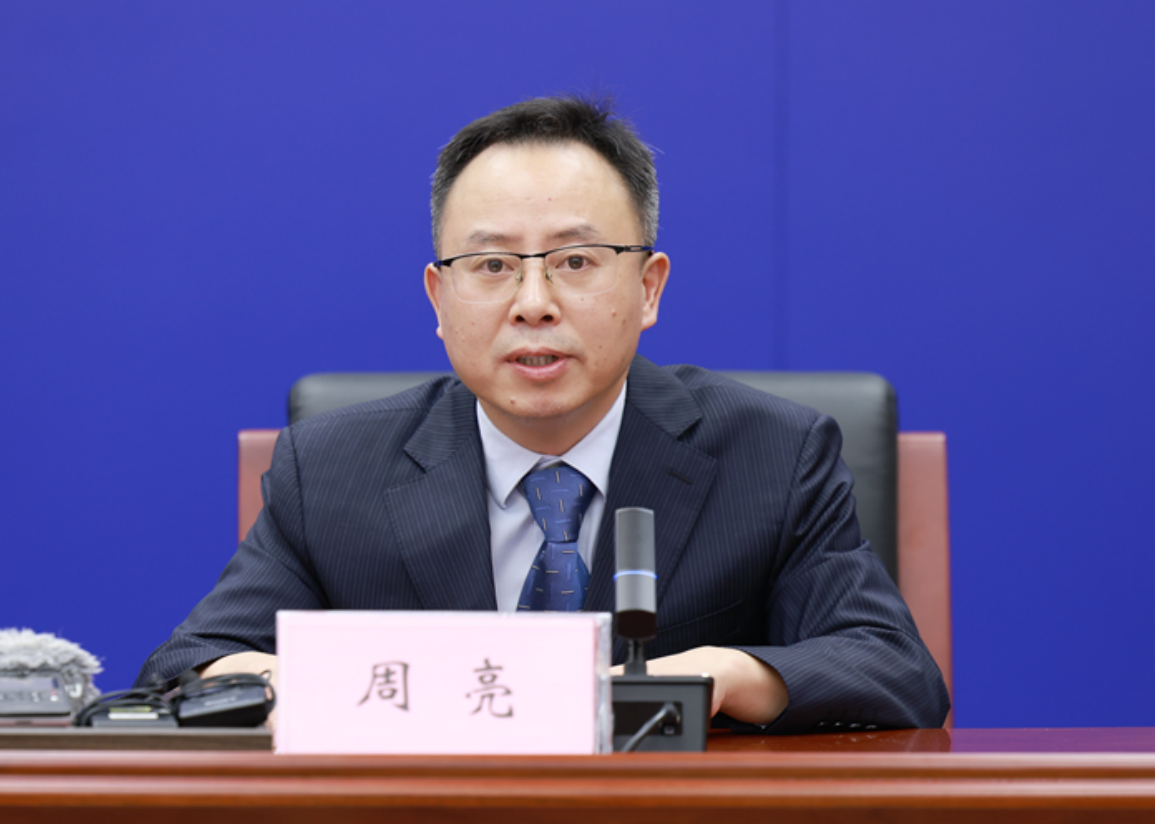
The announcement was made at a press conference on the implementation of the “Quality-Driven Industrial Chain Enhancement” initiative. Officials from SAMR and local market regulation authorities outlined progress made under the initiative and plans for its next phase.
Zhou Liang, Deputy Director-General of SAMR’s Special Equipment Safety Supervision Bureau, said hydrogen has emerged as a major focus for both industry and academia. In 2024, when SAMR launched the quality-focused initiative, it established a dedicated project to improve the quality of hydrogen fuel cells and hydrogen storage and transportation equipment.
The project targets quality-related bottlenecks across the hydrogen value chain, covering hydrogen production, storage, transportation and end use. It focuses on equipment safety, testing technologies and metrology, with the aim of establishing a comprehensive system of standards, technical specifications and testing methods.
The project is being implemented in two phases. **Phase 1 was completed at the end of 2025 and delivered several key results.**
Strengthening Standards Across the Hydrogen Value Chain
During Phase 1, China developed or revised **two international standards, 17 national standards, four metrology specifications and one safety technical code** for the hydrogen industry, addressing several gaps in the existing standards and regulatory framework.
Advancing Domestic Hydrogen Equipment
The international standard **IEC 63341-3:2025**, covering fuel cells for rolling stock, has been applied to the development and manufacturing of high-power hydrogen-powered locomotives in China.
Major companies, including CSSC Peric Hydrogen and Huadian Engineering, have also manufactured large-scale hydrogen production equipment in accordance with a series of electrolyzer standards. The initiative has helped advance the development of domestically manufactured equipment, with costs falling by more than **30%** and reliability improving by over **10%**, according to the briefing.
Improving Hydrogen Testing and Measurement
Phase 1 also delivered advances in hydrogen testing and measurement. Three sets of key testing equipment and two types of reference gas materials were developed, while four online testing and calibration methods were established and improved.
National-standard testing methods for high-pressure on-board hydrogen cylinders have been adopted by companies including Beijing Tianhai Industry and Guofu Hydrogen supporting type-approval certification for multiple cylinder designs.
A “70 MPa high-pressure hydrogen measurement traceability system” has also been installed and commissioned at the Beijing Yanshan Integrated Energy Station.
Standardizing Hydrogen Refuelling Operations
Standards covering hydrogen compressors, refuelling hoses and other equipment have been applied at dozens of hydrogen refuelling stations operated by companies including China Energy Investment, Guofu Hydrogen and Zhengxing Hydrogen Power.
A hydrogen swapping and refuelling model for fuel-cell vehicles, developed by companies including Guoneng Hydrogen Innovation, Baowu Clean Energy and Huadian Hydrogen , has entered in-depth sandbox testing. The initiative is intended to provide a replicable framework for validating new hydrogen business models.
Phase 2 to Expand International Standard Development
The second phase of the hydrogen-focused project will shift from addressing existing gaps to “expanding its scope and strengthening the overall standards system”, according to SAMR.
The next phase will focus on emerging technologies and equipment at the forefront of global hydrogen development. Priorities include national standards for advanced hydrogen storage and transportation equipment, such as **liquid-hydrogen cylinders and high-pressure spherical storage tanks**, as well as key hydrogen production components including **electrolyzer diaphragms and membrane electrode assemblies (MEAs)**.
China also plans to promote the upgrade of national standards for fuel-cell testing methods into international standards.
SAMR said these efforts are intended to strengthen the quality foundation of China’s hydrogen industry and support the targets set under the country’s “15th Five-Year Plan”.
At the press conference, Zhang Leilei, Deputy Director-General of SAMR’s Quality Development Bureau, highlighted progress in Shaanxi, where five major testing platforms have been established for the hydrogen industry chain and have supported breakthroughs in key fuel-cell technologies.
As part of the broader second phase of the Quality-Driven Industrial Chain Enhancement initiative, SAMR will prioritize the development of international standards in areas including “intelligent agents, brain-computer interfaces and hydrogen ”, while accelerating the formulation of national technical standards for technologies urgently needed by emerging industries.
Song Tongfei, a member of the Party Leadership Group of the Beijing Municipal Administration for Market Regulation, also highlighted Beijing’s efforts to reduce the R&D and equipment costs faced by small and medium-sized hydrogen companies.
The city has promoted the shared use of precision testing equipment at national-level platforms, allowing smaller companies to access advanced testing facilities without making major equipment investments. Corporate testing costs have fallen by more than “30% on average”, according to the briefing.
The latest measures signal a broader push to strengthen China’s hydrogen standards and testing infrastructure while increasing the industry’s participation in international standard development.
Exhibitor/Conference Consultation
Contact: Ms. Becky CHEN
Tel: +86 15910580218
Email: becky@cntigerexpo.com
Exhibitor Consultation
Contact: Mr. Lito HU
Tel: +86 13601321637
Email: lito.hu@cntigerexpo.com
Exhibitor Consultation & Media Cooperation
Contact: Ms. Yasmin ZHENG
Tel: +86 13621183385
Email: zhengyaxin@cntigerexpo.com


